
Expat Life

Getting to Know the UK: The Government

One of the first outings I had the pleasure of going on when I moved to England was a personal tour of the Palace of Westminster, aka the Houses of Parliament.  Getting a peek inside the magnificent chambers that house the government of the United Kingdom was truly a unique experience.

Like the US, the UK has two chambers that form its legislative body:  The House of Commons and the House of Lords.  And when you visit the Houses of Parliament, it’s striking how different their chambers are in terms of furnishings and details.  Just looking at the rooms in which they each debate tells you everything you need to know about how they evolved.  The House of Lords just oozes wealth and privilege.  It’s all shiny, ornate, and golden.  In contrast, the House of Commons looks like it was built on a very tight budget.  It’s plain and ordinary, all the common man would ever need.

I’ve also toured, years and years ago, the US Capital Building and it’s interesting to ponder how something as simple as the layout of a room steers the political process.  In the House of Representatives in the US Capital, the room is laid out in a classic lecture format with representatives wishing to express an opinion taking to the podium in front, talking AT the audience with little interaction.  But in the House of Commons the benches are arranged so that the opposing parties sit directly facing each other.  The room has more of an intimate feeling, one which encourages lively conversation and debate.

The House of Commons is composed of 650 elected Members of Parliament (MPs), each of whom represents the interests of their home constituency.  What I didn’t really understand until I saw the last general election in 2010 (they happen every five years) is how these MPs actually form the government.  During a general election, the political party that ends up with the most MPs forms the government.  The MPs in that party will have elected a leader who then becomes the Prime Minister.

So the only people in the UK who actually voted for David Cameron, the current Prime Minister, are the people of Witney just down the road from me.  This is largely why personality and image seem to play a smaller role in the political debate than what you’d find in the US.  People aren’t voting for an individual personality to lead them as PM.  They’re voting for local representatives that belong to the party whose policies they support.  In fact the 2010 general election was the first time in British history they’d even had televised debates.   The US has done that since 1960 when Richard Nixon learned all about the importance of a good shave.

Plus, these politicians don’t have time to craft campaigns based on polling numbers, negative attack ads, and pandering to special interests like you see in the years leading up to an American Presidential election.  One week Gordon Brown asks the Queen to dissolve Parliament and to call for a general election and then a few weeks later it’s all over and there’s a new government in town.  No need to drag the debate out for years.  Just get it done and get back to governing.

The House of Lords, aka peers, are not elected and do not represent a constituency.  Historically, members of the House of Lords were all hereditary, people of wealth and privilege whose titles have been passed down for generations.  Now, however, the hereditary peers have largely lost the right to automatically attend the House of Lords.  And since 1958, the PM can nominate people to be appointed Life Peers (their titles do not pass on to their descendents).  Life Peers are usually people who have distinguished themselves in business and industry.  For example, Alan Sugar and Andrew Lloyd Weber are both members of the House of Lords.

A couple other tidbits of note, Wales and Scotland both have their own governing bodies which have significant control over public services such as health, education, and transport.  Policies around things like defense and taxation still remain under central UK government control.  Interestingly, there is a movement in Scotland to once again become an independent country, separate from the UK.  There will be a public referendum on this in 2014.  And, as a member of the European Union, the UK is also governed by its policies particularly as they relate to trade, commerce, and employment.

Finally, if learning about the UK government is really your cup of tea, then head to Parliament’s official website for all detail you’d ever want.

This is part of my ongoing series about understanding life in the UK, an exercise that’s helping me study for my Life in the UK test.  Plus, I thought it would be interesting to share some facts and observations about this country I’m living in before it takes the world stage next month when the Olympics come to town.

Other Articles in the Series:

* Source: Life in the United Kingdom:  A Journey To Citizenship 2nd Edition by the Home Office

Red Delicious
Everyday Adventures

Strawberry Picking Isn’t Nearly As Bad As I Remember It

Yesterday I did something that I know for a fact my mother will be shocked to read about.  I voluntarily took my child strawberry picking.  I enjoyed it.  I thought it was a great afternoon out with my little man.  And I can’t even believe I’m about to type these words, I think we’ll go back and do it again.

You see, I went strawberry picking a lot as a child.  Mom was a jam maker and so we’d venture forth into the strawberry fields and pick for hours, days, years even (OK exaggerating a little there). Because if you’re going to make a proper batch of jam, well you need to pick a certain quota of strawberries.  You can’t just come home with one or two little baskets.  You need to come home with buckets upon buckets of strawberries.  And the strawberry picking I remember was the back-breaking kind, the kind with the strawberries actually planted directly into the ground, the kind that required you to crawl around on your knees searching for the luscious red berries.

But today, I’ve never seen such a wonder.  Row after row of strawberries at eye level where I can just take a leisurely stroll picking, and maybe eating, as I go.  And the little man loved it.  He’s not quite tall enough yet to reach most of the berries, but some were hanging well within the grasp of his little hands.  My most difficult challenge was getting him to pick the ripe ones.

Certainly as he gets older, other much cooler things will have his attention and he will have no interest in going strawberry picking.  Maybe this is what happened to me.  But for now, we’ll just enjoy this as a nice way to spend some time together in the outdoors and learn a little about where food actually comes from.  As I am not a jam maker, just a few berries in a basket to enjoy with cream are enough to satisfy my strawberry cravings.

Maybe we’ll even pick some raspberries next time.

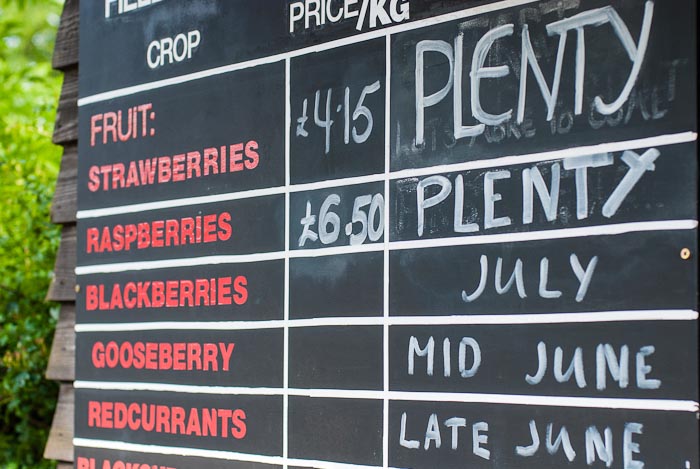
Pick Your Own Menu

Strawberry FieldsPick Me, Pick Me

Sampling the Berries

Strawberry Fields

Luscious Berries


Motherhood

This Evening’s Playlist

Shoes stomp on the chair and make the bass line boom.

Fork taps on the bowl brings the beats in the room.

Pots bang and crash adding cymbals to his tune.

Clap clap little hands on this night in June.


He’s a one man percussion band.  The crowd went wild.

The London Eye
Expat Life

Getting to Know the UK: People, Customs, and Traditions

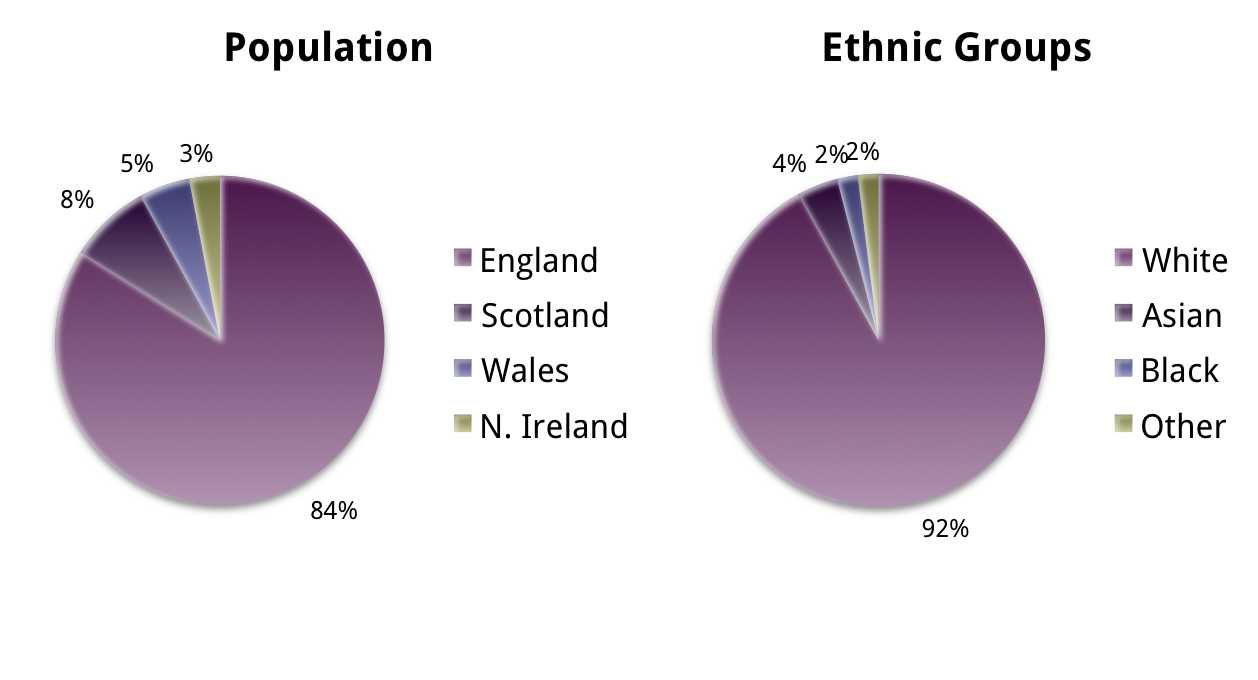
Welcome to part 3 of my Life in the UK series.  This week I’m learning more about what the population of the UK looks like.  As in America, the UK completes a formal census every 10 years.  The most recent one was in 2011 (which I’m included in and remember completing the form), however it’s data has not yet been released.  So instead, statistics from the 2001 census are relied upon.

I was initially very surprised to learn that 92% of the population is considered white.  However once I thought about it (and how people would answer on a census form), I shouldn’t have been surprised.  As I look around when I’m out and about I do see less diversity on the surface.  Certainly compared to a life growing up in Virginia where only 66% of the population was white (followed by 19% Blacks and 7% Hispanic). My statistically insignificant sample at a restaurant I had lunch in the other day had about 45 people in total (including staff) that I could see.  Of these, only 3 would have been classed as non-white.  (Note:  I don’t normally calculate the ethnic distribution in places I eat but these lessons have inspired me to be a little more observant, and curious).  But “white” is actually its own melting pot of cultures.  White could be Russian, Polish, French, German.  I’ve had several lovely German women in my life here, most recently my hairstylist.  Just a reminder never to judge a book by its cover.

And in a nod to differences in the English language, Asian here means people of Indian, Pakistani, or Bangladeshi decent.  Not Chinese or Japanese which is how I would have used this term before.  Not surprisingly, most ethnic groups live in urban areas and almost half are in London and its surrounding areas.

For as many people as live here, 60 million, the UK is a small nation.  The UK has similar land mass to the US state of Oregon which has only 4 million people.  In terms of population density, the US has 83 people per square mile, whereas the UK has 656 per square mile.  No wonder they have amazingly tiny roads, parking spaces, and semi-detached houses!  And no wonder public transportation doesn’t work in America outside urban areas.  Too many wide open spaces.
UK Population

What’s That You Say?

As an American when you travel to the UK, you think great they speak English this will be easy.  (Cause we Americans generally don’t have second languages, I’m just sayin’).  The Brits say everything in a way we can understand only in a way that makes it all sound so much more posh and elegant.  But holy moly.  For a country this small, there are an amazing number of dialects and accents, some of which I’ve really struggled to understand.  When I first moved here and was working, most of the people I worked with were from “the North.”  And I tell you what, I struggled everyday to catch everything they said, especially on conference calls.  It took practice and lots of TV watching to start feeling like I could regularly understand people.  I’ve said more “Pardons,” “What’s Thats,” and “Say Agains” then I ever remember.  And the Scots, goodness.  Many of the service centers for the large banks etc. are in Scotland and I know I struggle to communicate with them over the phone.  To be fair, I think they struggle with my accent just as much as I do with theirs.  I’ve resorted to spelling things on several occasions.

Some of the most common dialects:

  • Geordie (Newcastle) – Think Cheryl Cole
  • Scouse (Liverpool) – Think Wayne Rooney, Steven Gerrard (who by the way I challenge you to listen to in a post match interview to see if you can understand I word he’s saying)
  • Cockney (London) – Think Michael Caine, Russell Brand
  • Scottish – Think Sean Connery
  • Welsh – Think Tom Jones, Catherine Zeta-Jones

Religion and Other Traditions

The UK is still largely a Christian society, about 72% of all people.  Muslims account for about 3% of the population.  However, only around 10% of the population attends regular religious services.  And, it’s certainly not for lack of churches.  I think churches beat out even Starbucks for being on every corner.

In the UK, they celebrate largely the same  festivals we’re familiar with in America, Christmas, Easter, Valentine’s Day, Mother’s Day, etc.  Some of these for obvious reasons, like Christmas, are on the same day.  Others like Mother’s Day always confound me as I have to remember two different dates.  Celebrating Boxing Day on December 26th is a nice new tradition making the loss of Thanksgiving a little less painful.

I now totally get the reference to “Bonfire Night” (aka Guy Fawkes night) in Bridget Jones’ Diary.  Also if you’ve ever seen Brits on TV in early November you’ll see many wearing poppies on their lapels.  This is in honor of Remembrance Day, November 11, which commemorates those who died WWI, WWII, and various other wars.  On this day there is a national 2 minute silence at 11 am.

Sporting Traditions

The UK is certainly a sporting nation.  Football (soccer), tennis, rugby, cricket, golf, and Formula 1 top the list.  We’re a household of avid sports fans in general but football is definitely king.  And I tell you what, football has the longest playing season of any sport I’ve known.  Just when I think football is over (she says with relief), it’s on again (sigh).

And I’ve realized that in the run-up to the Olympics the British calendar is loaded with major sporting events.  We’ve got the Euro 2012 football tournament now underway (come on England!), Wimbledon in just a couple of weeks, then the British Grand Prix, then the Open Championship.  So between now and July 27th when the Olympics start, you’ve got plenty of opportunities to appreciate the great British sporting traditions.

So pour yourself a Pimms, have some strawberries and cream, and enjoy.

This is part of my ongoing series about understanding life in the UK, an exercise that’s helping me study for my Life in the UK test.  Plus, I thought it would be interesting to share some facts and observations about this country I’m living in before it takes the world stage next month when the Olympics come to town.

Other Articles in the Series:

* Source: Life in the United Kingdom:  A Journey To Citizenship 2nd Edition by the Home Office
A Feast of Smells
Soul Searching

A Feast of Smells

Do you pay attention to the smells that surround you everyday?  I know I certainly don’t.  And with the chronic sinus trouble I’ve had since moving to the UK, I know my sense of smell isn’t quite as sharp as it used to be.  But we’ve got a sense of smell for a reason don’t we?  To give us more information about the world around us, warn us of dangers like when food gets rotten or when there’s a fire.  Or to let you know when you need to cleanup that nightmare poo your child’s just done.  But smells also stir emotions and memories, heightening our experiences in life.

Last night I made a dish that I’ve made several times before but had never really thought about why I like it so much.  Is it because it’s easy?  YES.  Is it because it’s yummy?  Yes.  But as I looked at the ingredients I’d gathered on the cutting board, I realized that I also enjoy making and eating this because it just smells so good. The aromas of the lemons, rosemary, and garlic just have a little party in my nose making the meal more delicious.  And the scents even hang around in the house for a while reminding me of a nice home cooked meal.

Why not take note of the smells you come across today?  You might rediscover a bit of the world you’ve taken for granted.

And, if you’re interested, I made Heston’s Tagliata with Rocket and Parmesan Salad.  Highly recommended.